
 Mikki
Mikki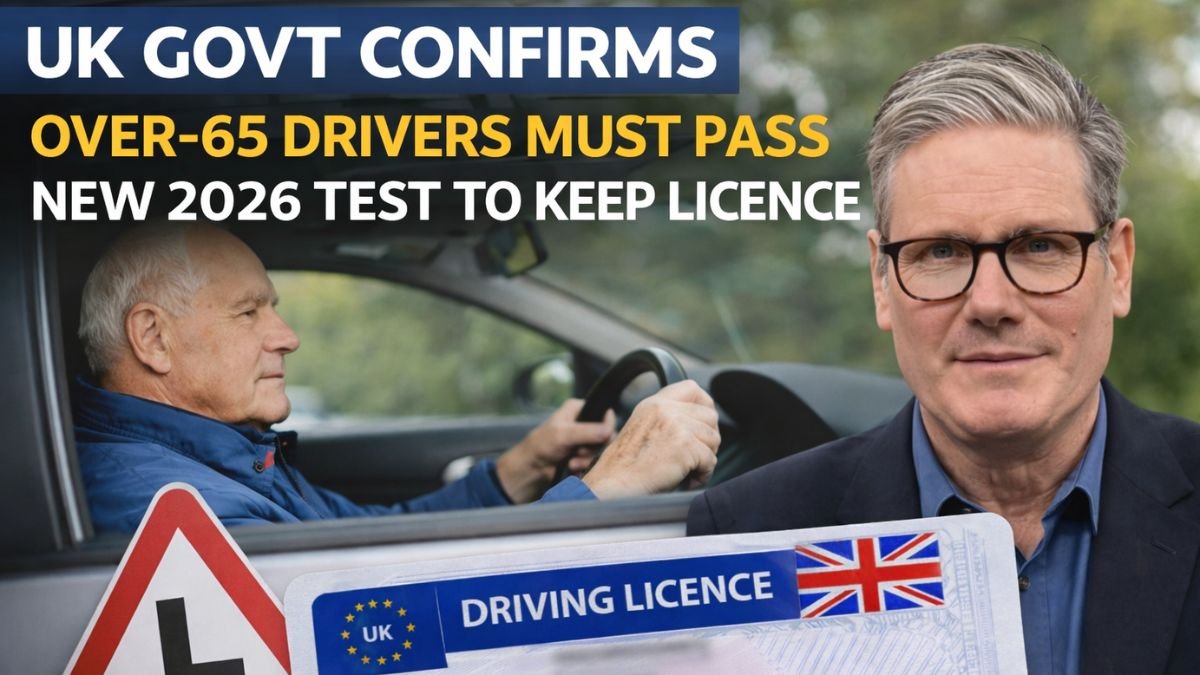
The UK government has announced a major reform to national driver licensing rules, confirming that from late 2026, motorists aged 65 and over will need to pass a new mandatory assessment to retain their full driving licence.
The policy, presented as a road safety initiative, is expected to affect millions of drivers across Great Britain and Northern Ireland.

The proposal has already sparked nationwide debate, with supporters highlighting safety benefits and critics raising concerns about fairness and independence.
What The New 2026 Rule Involves
Under the proposed framework, drivers aged 65+ will undergo periodic evaluations designed to assess their fitness to drive.
While final operational details will be confirmed following public consultation and parliamentary approval, the government has outlined the core components:
Key Elements of the Assessment
- Annual or Biennial Evaluation: Drivers may be required to attend a formal assessment every one or two years at designated testing centres.
- Vision Screening: Mandatory eyesight checks to ensure drivers meet legal visual standards.
- Cognitive and Reaction Testing: Assessments of reaction time, awareness, and decision-making skills.
- Practical Driving Test (If Required): Some drivers may need to complete a supervised on-road driving assessment.
- Medical Reporting: GPs may be asked to provide fitness-to-drive confirmation for individuals with relevant medical conditions.

Officials stress that the measure is intended to be preventative rather than punitive, focusing on early detection of impairments rather than automatic licence withdrawal.
Why The Government Is Introducing The Rule
Transport officials say the reform is designed to:
- Improve road safety outcomes
- Detect age-related impairments earlier
- Reduce collisions in complex traffic environments
- Support continued safe mobility
Government data referenced during the announcement indicates a rise in age-related incidents involving drivers over 65, particularly at junctions and in high-density urban settings.

While older drivers are generally less likely to engage in high-speed collisions, certain risks such as slower hazard perception and visual limitations have been identified.
The government maintains that structured assessments will allow many older motorists to continue driving safely, rather than face unexpected licence restrictions.
Who Will Be Affected?
The UK currently has more than 11 million licensed drivers aged 65 and over, with approximately 5 million drivers aged 75+. With the population ageing steadily, these figures are expected to increase over the next decade.
The new rule would apply across:
- England
- Scotland
- Wales
- Northern Ireland
Drivers approaching age 65 near the 2026 rollout will receive transitional guidance once final regulations are confirmed.
Proposed Assessment Overview
| Requirement | Details | Frequency |
|---|---|---|
| Vision Test | Eyesight and visual acuity checks | Annual or Biennial |
| Cognitive Screening | Reaction time and awareness testing | Annual or Biennial |
| Practical Driving Exam | On-road assessment (if required) | Case-dependent |
| Medical Certification | GP report for certain conditions | As needed |
Exact intervals and administrative procedures will be clarified before implementation.
Legal And Legislative Process
The reform requires amendments to the Road Traffic Act and related statutory instruments. A public consultation is underway, and Parliament is expected to debate the final structure of the proposal before formal adoption.
If approved, the new assessment requirement is expected to take effect in late 2026.
Until then, current licence renewal rules remain unchanged.
Reactions From Advocacy Groups
Supporters Say:
- The rule is a sensible step toward safer roads
- Regular evaluations are preferable to blanket age bans
- It encourages proactive health monitoring
Some road safety organizations have described the measure as a balanced and modernised approach to evolving traffic conditions.
Critics Argue:
- Age alone is not an accurate predictor of driving ability
- The policy could undermine independence
- Rural drivers may face greater hardship due to limited public transport
- Testing may create anxiety and added financial costs
Organizations representing older drivers have called for ability-based assessments across all age groups rather than age-triggered testing.
Impact On Older Drivers
For many Britons over 65, driving is closely linked to:
- Access to healthcare
- Social engagement
- Grocery shopping and essential services
- Family responsibilities
In rural and suburban areas, losing a licence could significantly affect daily life. Concerns have been raised about assessment costs, travel to testing centres, and potential mobility loss.
To address these issues, the government has indicated plans to:
- Expand vision screening services
- Offer subsidised refresher driving courses
- Improve community transport alternatives
Officials say the objective is to preserve safe independence rather than restrict mobility unnecessarily.
FAQs
When will the new over-65 test begin?
If approved, the requirement is expected to start in late 2026, following legislative approval.
Will all drivers over 65 need a full driving test?
All will undergo assessment, but practical on-road tests may only be required depending on screening outcomes.
Could I lose my licence if I fail?
Drivers who do not meet required standards may face retesting, restrictions, or possible licence suspension depending on results.